
A Miller’s Tale
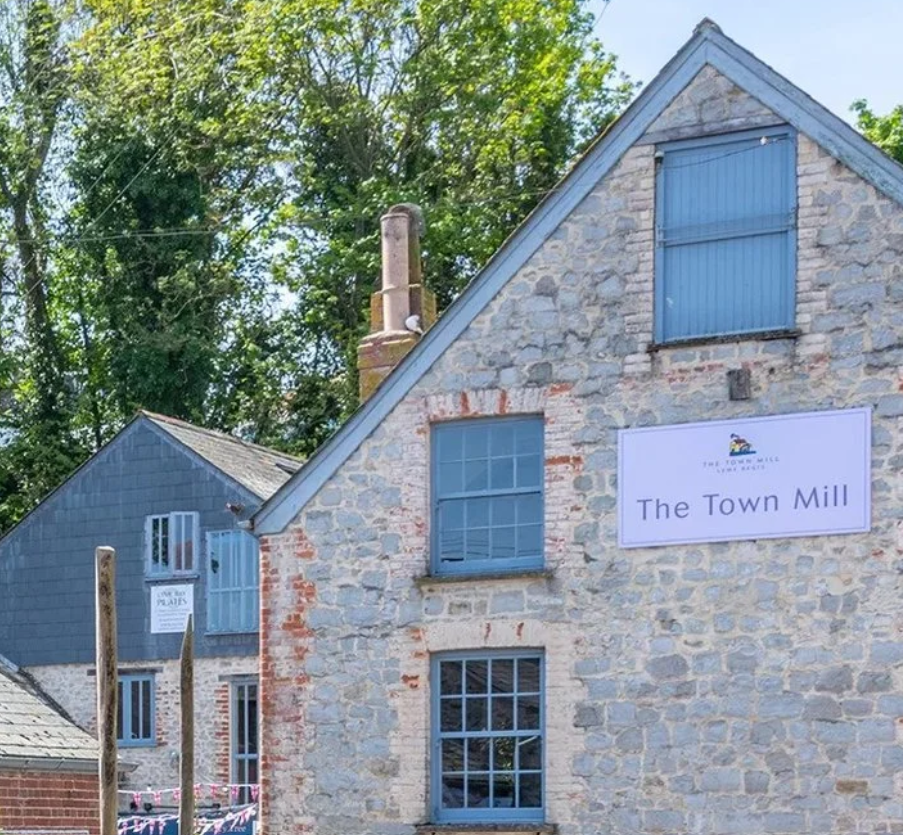
Mark Loughlin’s latest blog after a visit to the Town Mill captured his imagination.
A Miller’s Tale
So, the other week, I happened to be passing by the Town Mill Lyme Regis and decided to pop in for a look around. It’s a wonderful place, with lots of incredible facets; the machinery, the building itself and the production of flour. But first, I must mention the history of the Mill – as told to me by one of the current volunteer millers, Mike Gilderdale.
Revolutions and redundancy
While there is mention of a mill in the Domesday Book, the first documentry evidence for today’s Town Mill comes in 1340 when unusually Lyme Regis was granted the right to have its own mill by King Edward III, rather than it being owned by a rich landowner or the church – hence the name of Town Mill. Most millers bought the grain and sold it, but at the Town Mill, the miller took a tithe of one sixteenth of the grain as payment. While we tend to think of millers as jolly sort of characters, they weren’t universally popular. It was common practice for the miller to extract his tithe downstairs where everyone could see, then take a few more crafty scoops of grain upstairs while out of sight. One such individual, William Dare, who was miller from 1498 to 1508, was in court at least once a year for exceeding his tithe, except 1506, when he was actually Mayor of Lyme Regis. Political corruption is nothing new!
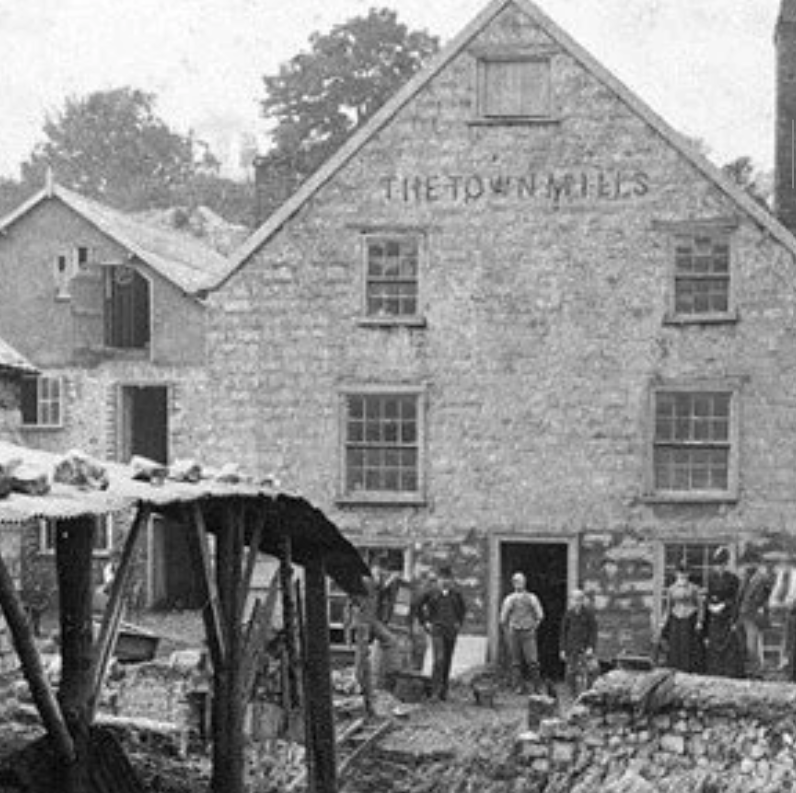
Then in 1644, the Mill burnt down during the Civil War. Lyme Regis had thrown its lot in with Oliver Cromwell and his Roundheads, to which King Charles I responded by sending his nephew Maurice and 4,000 troops to retake the town. In fact, they failed, but as they left, they fired burning arrows into the town destroying a number of houses and burning the Mill down. Four years later in 1648, the Mill was rebuilt in stone with one of the beams on the second floor coming from an old ship’s mast – an early example of upcycling!
The beginning of the end for the Town Mill as it was, came when American and Canadian wheat imports began flooding over to the UK in the late in the late 1800s. Wheat grown in North America had seen significantly more sunshine than home-grown wheat, and consequently had a higher protein content, which made for better bread. This superior American wheat was imported to the large ports, such as London or Bristol, and was processed in huge new, more efficient factories. These factories crushed the grain with a series of rollers of decreasing size, which could take out things like bran and wheatgerm. Local mills like the Town Mill couldn’t compete and something like 20,000−40,000 working mills closed within 30 years, leaving only 600 traditional mills still operating. The Town Mill closed down in 1926 with the Town Council using it as a depot for a while and a band using it as a rehearsal space – despite the holes in the floor! By 1936, the original wheel had been replaced by a steam turbine generating DC electricity for parts of the town. Electricity generation continued up to the arrival of the national grid sometime around the Second World War.
Resurrection (what goes round, comes round!)
The Town Mill fell into serious disrepair and was nearly demolished. In 1991 the derelict Mill was about to be knocked down to make way for a block of flats and a car park. Riding to the rescue came renowned author, John Fowles (French Lieutenant’s Woman, etc), and local artist, David West. Their campaign brought in National Lottery funding and other grants totalling £300,000. Another £500,000 in grants by 2001 helped things along nicely and The Town Mill Trust that owns the Mill managed to acquire the house as well as the surrounding buildings. Pre-COVID, a third of the income for the Trust was from the tenants, a third from the art galleries and a third from donations and flour sales.
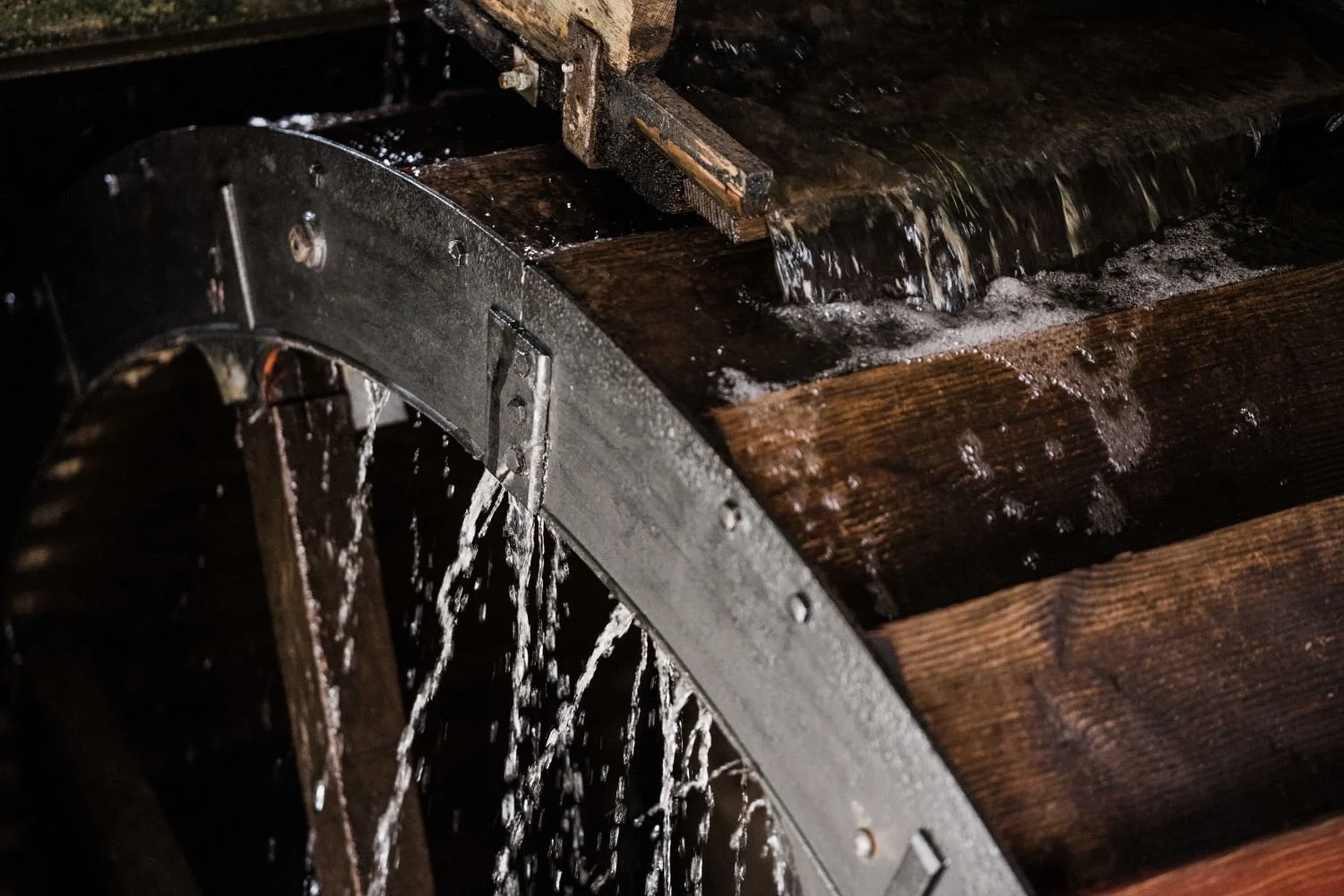
Back to my visit. I approach alongside the natural power source, the Mill race. This is the water channel which feeds the waterwheel and is controlled by two sluice gates inside the Mill. The main sluice gate lets the water in and in front of that there’s an emergency sluice gate which is controlled by a sensor on the grain hopper; if the hopper runs out of grain, it closes the emergency sluice gate. This is obviously a modern bit of kit – in the old days, there were bells to indicate impending disaster.
An ancient beast
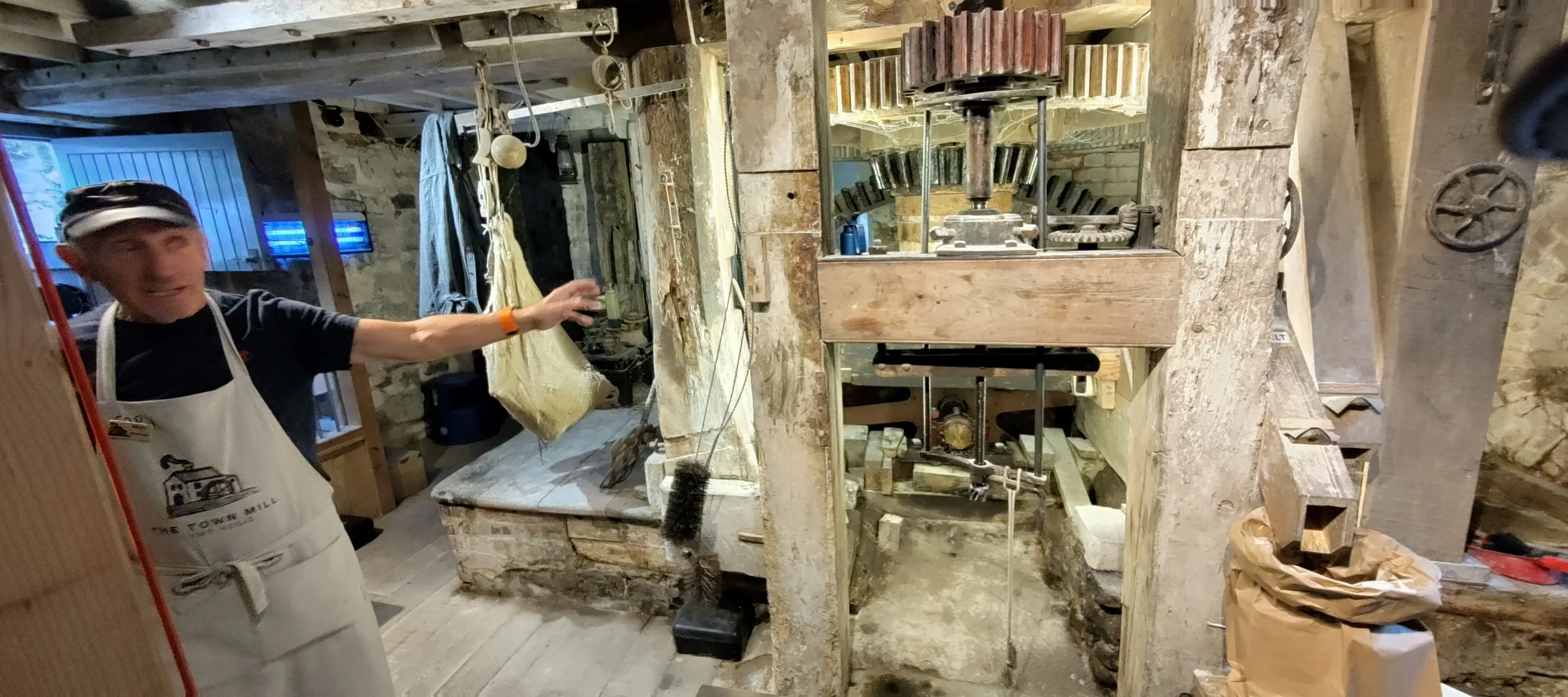
Entering the Mill, it’s immediately apparent how ancient the place is, but also how well it is cared for. There are numerous explanatory boards and displays of old hand querns and things like the massive millstones in the Mill today. Heading up to the second floor, now displaying a working model of a mill made by an ex-miller, and part of the sack hoist, I was lucky enough to join the start of a guided tour. The top floor is the ‘sack floor’ was where grain is stored, and below this on the second floor - the ‘stone floor’ – is where the grain is ground into flour. As the miller engages the waterwheel, causing the grindstone to turn, the whole building starts to shake as if it’s alive. The waterwheel is turning at roughly 4 revolutions per minute (rpm) causing the millstone to turn at roughly 100 rpm.
Milling speed is just one of the things the miller must get right. Also crucial is the amount of grain flowing into the stones. Coarse control is achieved by changing the feed of grain from upstairs and fine control is on the ‘meal floor’ where the miller can control the gap between the stones and thus the flow of grain into the mechanism. The miller wants to mill slowly to avoid overheating the grain, which could destroy some of the enzymes in the flour.
The grain is poured into a hopper – like a box with a funnel – and falls into the shoe. A piece of metal called the damsel continually knocks the shoe so it feeds the grain into the millstones. The name damsel comes from when people used hand querns (400 BC) where the mother did the turning, the daughter (damsel) fed in the grain. The shoe and damsel combination that replicates the daughter’s job is also called the ‘chatterbox!’.
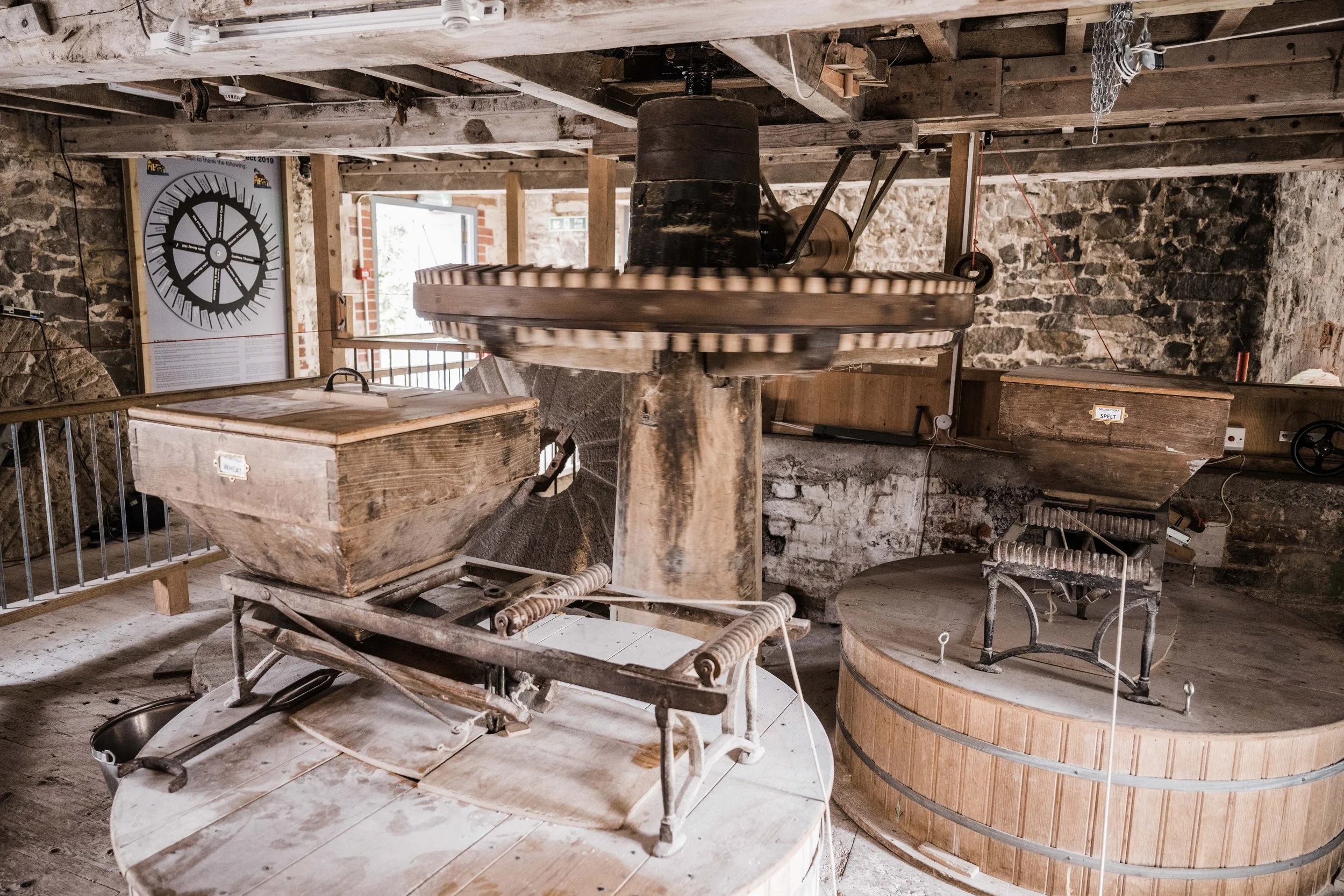
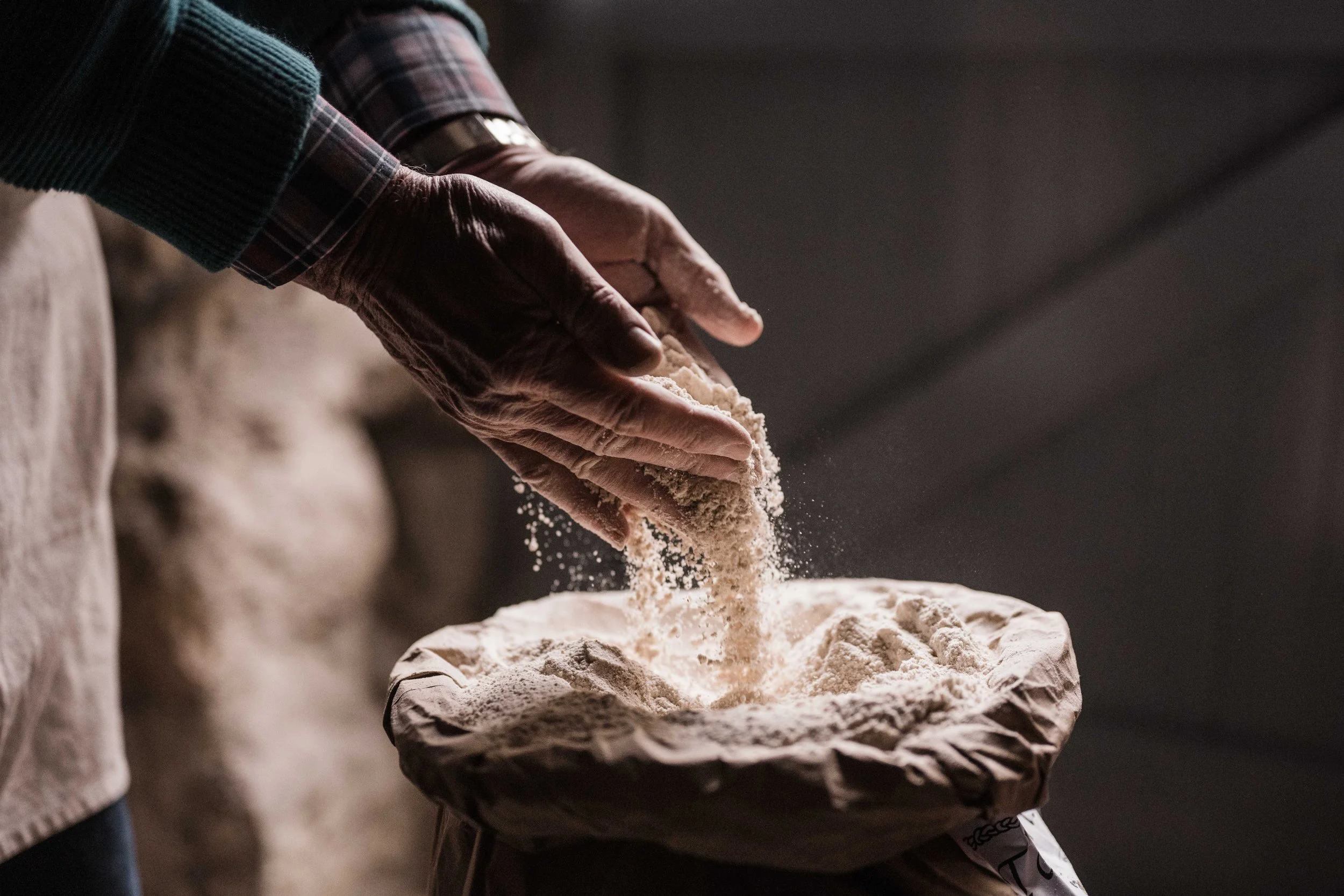
A little more terminology here [and please don’t blame me, I’m just passing on what I learned!]: adjusting the stones too close together means you will ‘grind to a halt’; when the miller controls the amount of grain entering the stones and the gap between the stones, he uses the ‘rule of thumb’, where he rubs the flour between finger and thumb to see if it’s fine enough; and when this was a domestic operation with mother and daughter, it was called ‘the daily grind’.
Taming the beast
As I said, the Town Mill feels like it is alive, and it is potentially a dangerous beast. There is some very large machinery moving very quickly, which is why there’s a ‘safety stop’ to prevent the stones running without grain. There are also various gates and barriers to prevent millers or visitors from adding themselves to the final product. If the stones were to run without the grain, not only would they be damaged, but also, they would give off sparks. Flour is a fine dust that is more explosive than gunpowder, so sparks are not welcome – many a mill has exploded due to the stones running ‘dry’. The grain is essentially the lubricant that keeps the stones running smoothly and prevents them from being damaged. In the old days of large-scale production, millers were also susceptible to another danger - ‘Miller’s Lung’ caused by inhaling huge amounts of flour dust. Up until it closed in 1926, the Town Mill was capable of processing 1−3 tonnes of wheat a day; today, it produces a mere 6 tonnes a year and Miller’s Lung is fortunately not an issue although the amount of flour dust is monitored.
Our daily bread
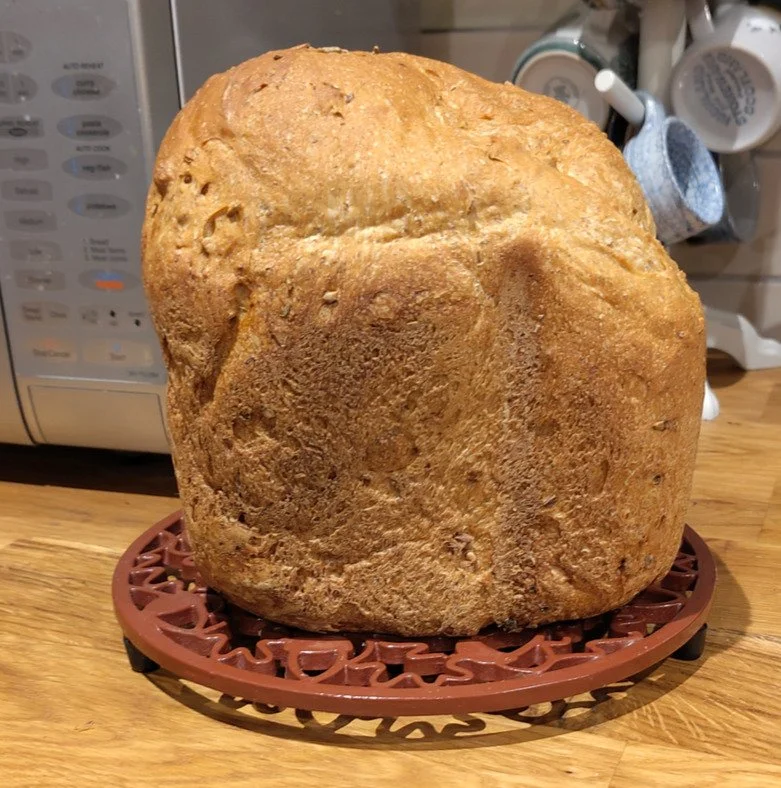
Moving down to the ground floor – the meal floor - it’s very satisfying to see the milled flour pouring down another chute into a flour sack. The flour produced is wholemeal, which still contains the husk, bran and wheatgerm. White flour has the bran and wheatgerm removed and is essentially just starch. Modern white flour is a processed food containing calcium carbonate, iron, niacin and thiamine. Myself, I’d rather have the natural version, so it’s off to the shop where I get myself a bag of wholemeal flour for bread making purposes. There’s also lots of other merchandise, including some tempting recipe cards, all of which have been tried and tested by members of the Baking Team – from sourdough to pasta, to pastries and cakes. I haven’t been that adventurous yet, but I can confirm that it works well for wholemeal bread.
OK, enough of me grinding on; the Town Mill is a fascinating place to visit. But don’t take my word for it, give the Mill a visit and buy your own flour and recipe cards. If you are at all interested, the Town Mill is open to the public every day of the week and is free to visit (donations are always welcome and with purchases from the shop all go back into keeping the Mill going) Check out the website for opening times, etc. The weekend of the 23/24/25 May is 'Millfest' a celebration of all things heritage and local craft with lots going on for all the family and an opportunity to mark 25 years since the restored Mill opened. More details here.
Finally, Mike would never forgive me if I didn’t tell you, it’s a great friendly place to volunteer and they are always looking for people to help out.
Until next time, Mark
May 2026