
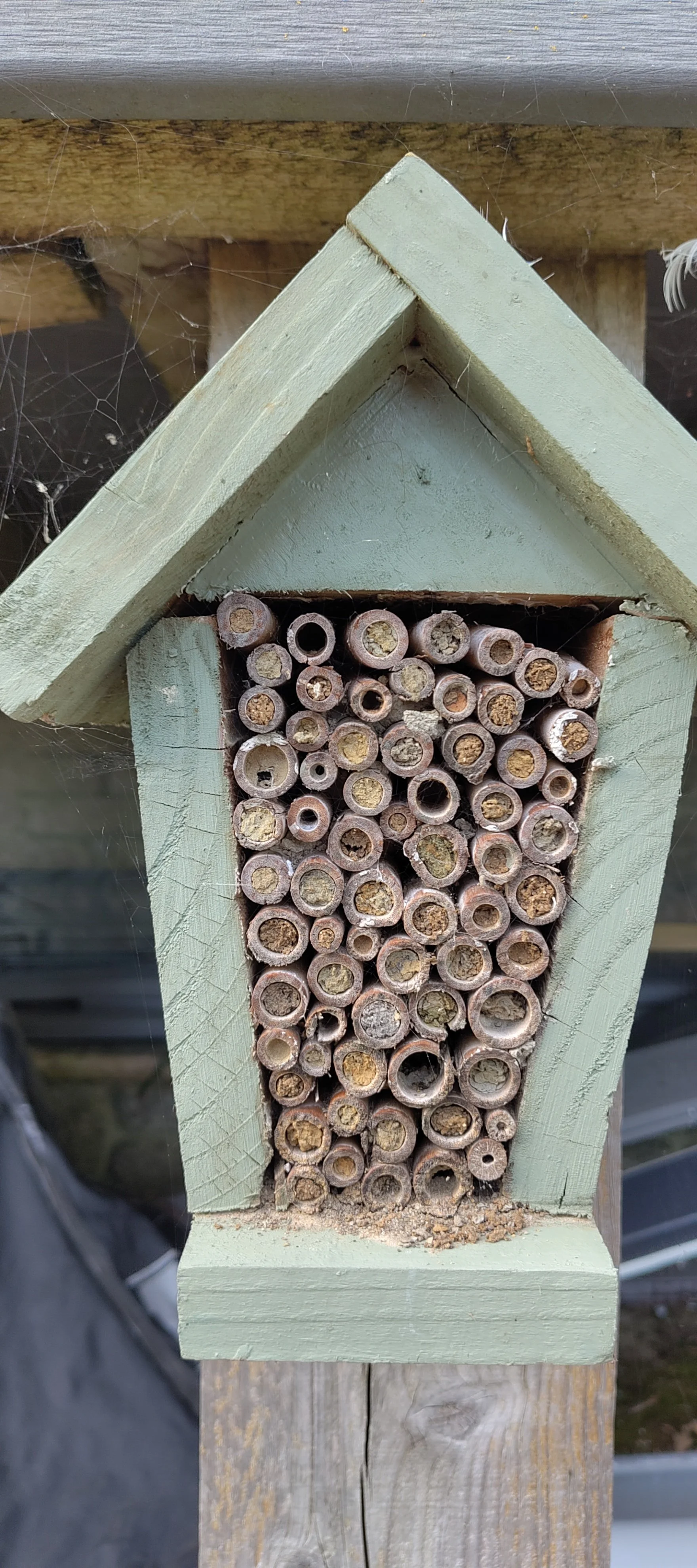
Mark Loughlin has developed a fascination with solitary bees..
Well, that was an incredible summer for most of us. But there are some creatures in my garden that missed it entirely. I’m talking about the occupants of my little bee hotel which has proved very popular over the past couple of years.
By now, we are all aware that honeybees and pollinators in general are in decline. So, anything we can do for the bees is a good thing, right? Well it turns out (as ever) to be a bit more complicated than that.
During a conversation with a London friend, I was surprised to hear that he’d given up keeping bees on the roof of his building in the city. Apparently, he’d joined a group doing research on ‘pollinators’ who were of the opinion that too many pampered honeybees were actually becoming detrimental to the pollinator population. Confused? I was.
In the UK, there are many insects that are classed as pollinators. Apart from the more than 250 solitary bee species, 24 types of bumblebee and our well-known honeybees, there are around 1,000 species of beetle as well as all kinds of hoverflies, butterflies and moths that play an important role in pollination. Urban beekeeping has boomed in recent years, but honeybees require supplemental feeding with sugar water, particularly during spring and autumn. The burgeoning honeybee population with regular supplies of energy during times of scarcity is now outcompeting other pollinators in our towns and cities.
And it turns out that solitary bees are fantastic pollinators; carrying dry, loose pollen all over their bodies, rather than in ‘saddle bags’ on their legs, they are way more efficient pollinators then honeybees. Also, because they live independently, with each female building her own solitary nest, they have no hive or queen to defend and are, therefore, non-aggressive and very unlikely to sting people or pets. One such solitary bee is the red mason bee (which I think is the species that largely moved into my small bee hotel). These charming little creatures, slightly smaller than honeybees, have a red-brown body covered in ginger hair. Totally unconcerned by my presence, they nevertheless spent a lot of time tussling with each other over which holes they wanted to occupy. They also sparred with another interesting species, a red and blue coloured thing that I identified as a ruby-tailed wasp. It turns out they had good reason to try to chase off the wasps – they are a parasite that lay their eggs in the nest of the masonry bee. Once the wasp larvae hatch, they waste no time in tucking into the host species, emerging next spring as full-grown adults.
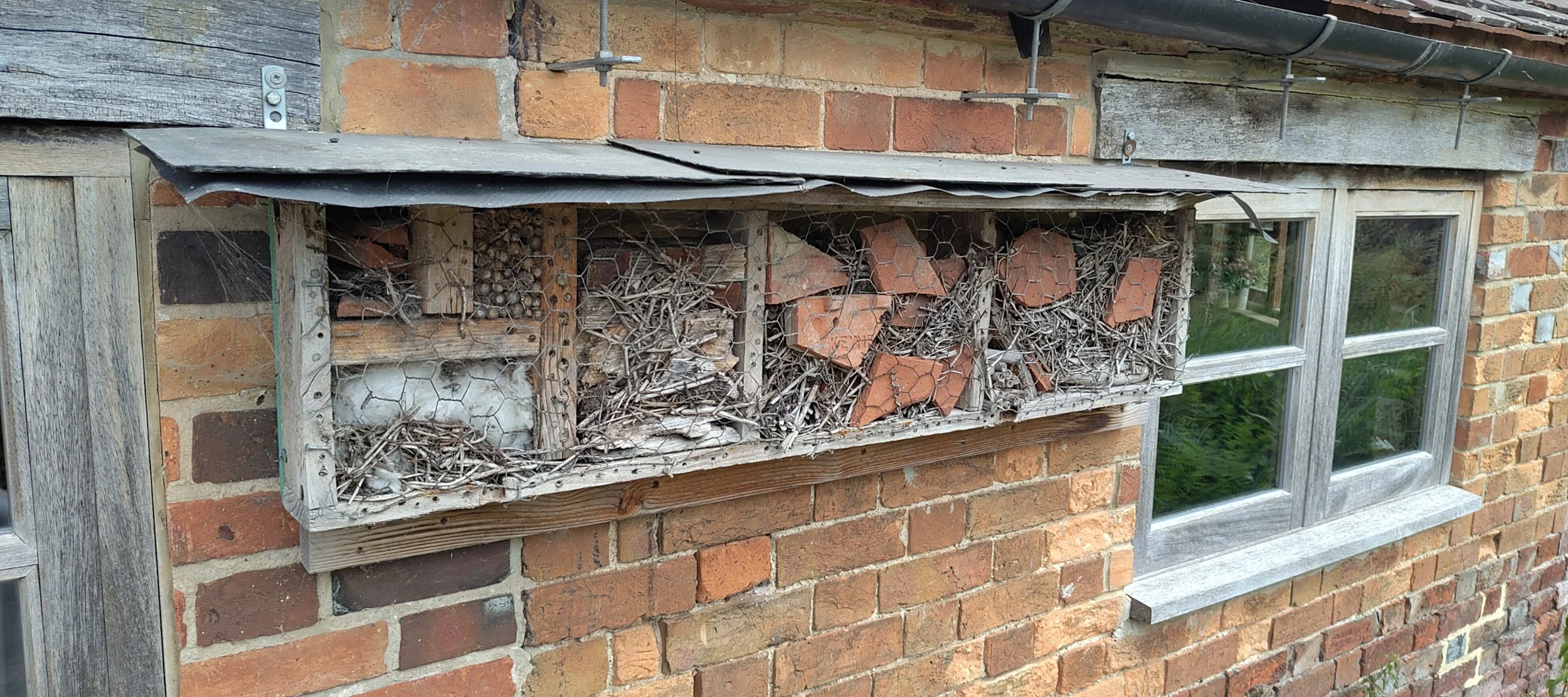
My bee hotel is well sited – more by luck than judgement (see photo above) – with a south-facing aspect and the slightest downward tilt (important for the bees who don’t want rainwater running into the tunnel). It’s also a good idea to site your bee hotel close to the ground as many will prefer a low-rise property over a tower block approach. Indeed, approximately 70% of solitary bees are ground-nesting
I’m pleased to say, I’m now involved with Turn Lyme Green’s ‘Bee Friendly Lyme Regis’ project, which aims to put up a number of bespoke ‘des-res’ bee hotels (see photos below) around the Lyme Regis area. ‘Channels’ are provided for solitary bees to enter and nest. These specially built hotels can be opened to see if bees have moved in. (see ‘Bee Friendly Lyme Regis ’ page on this website . )
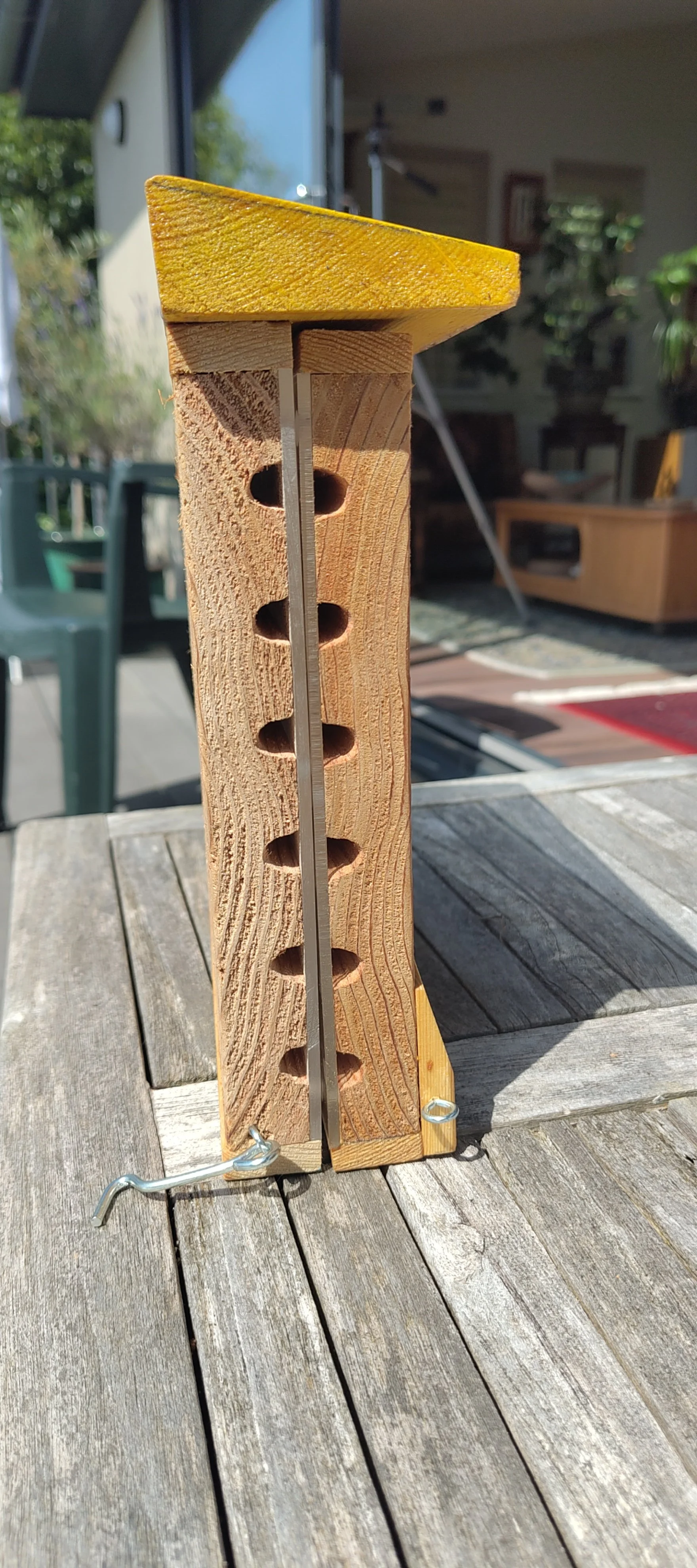
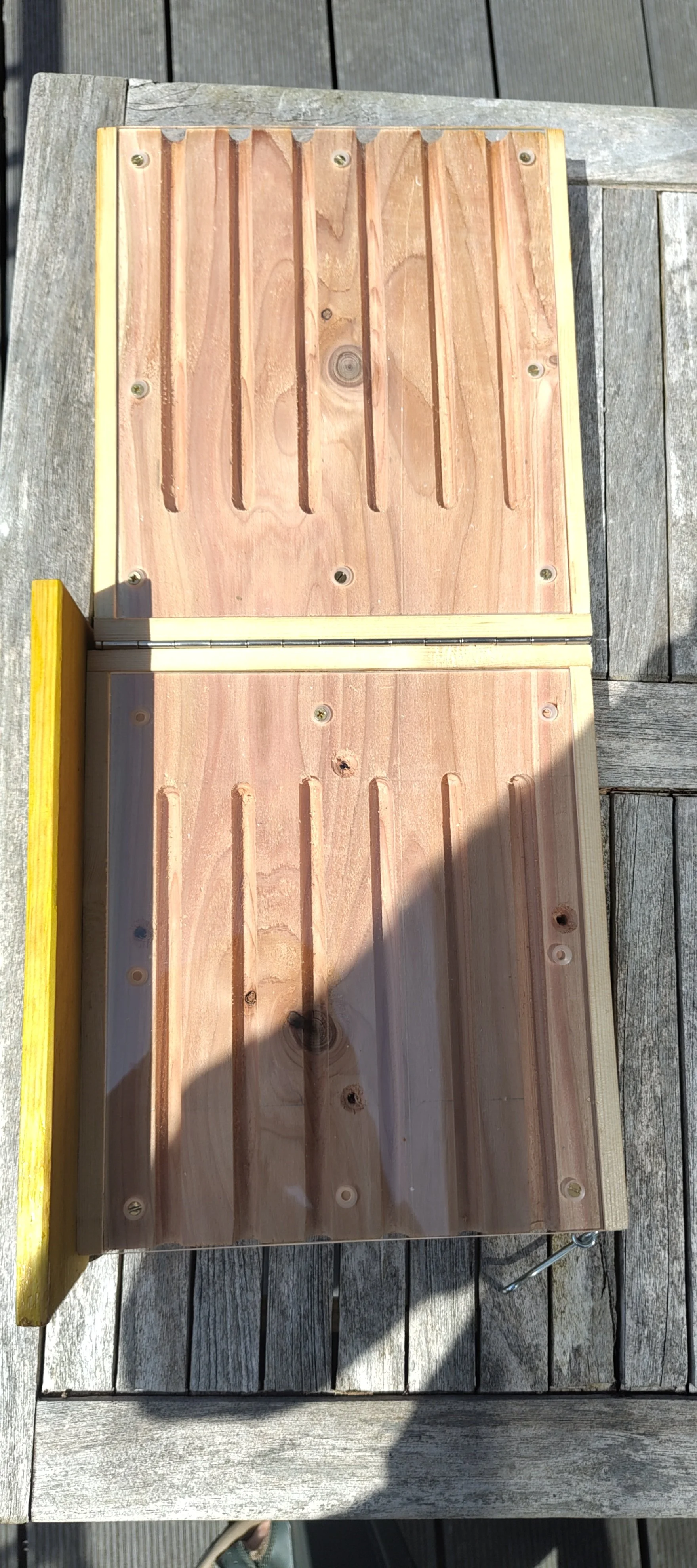
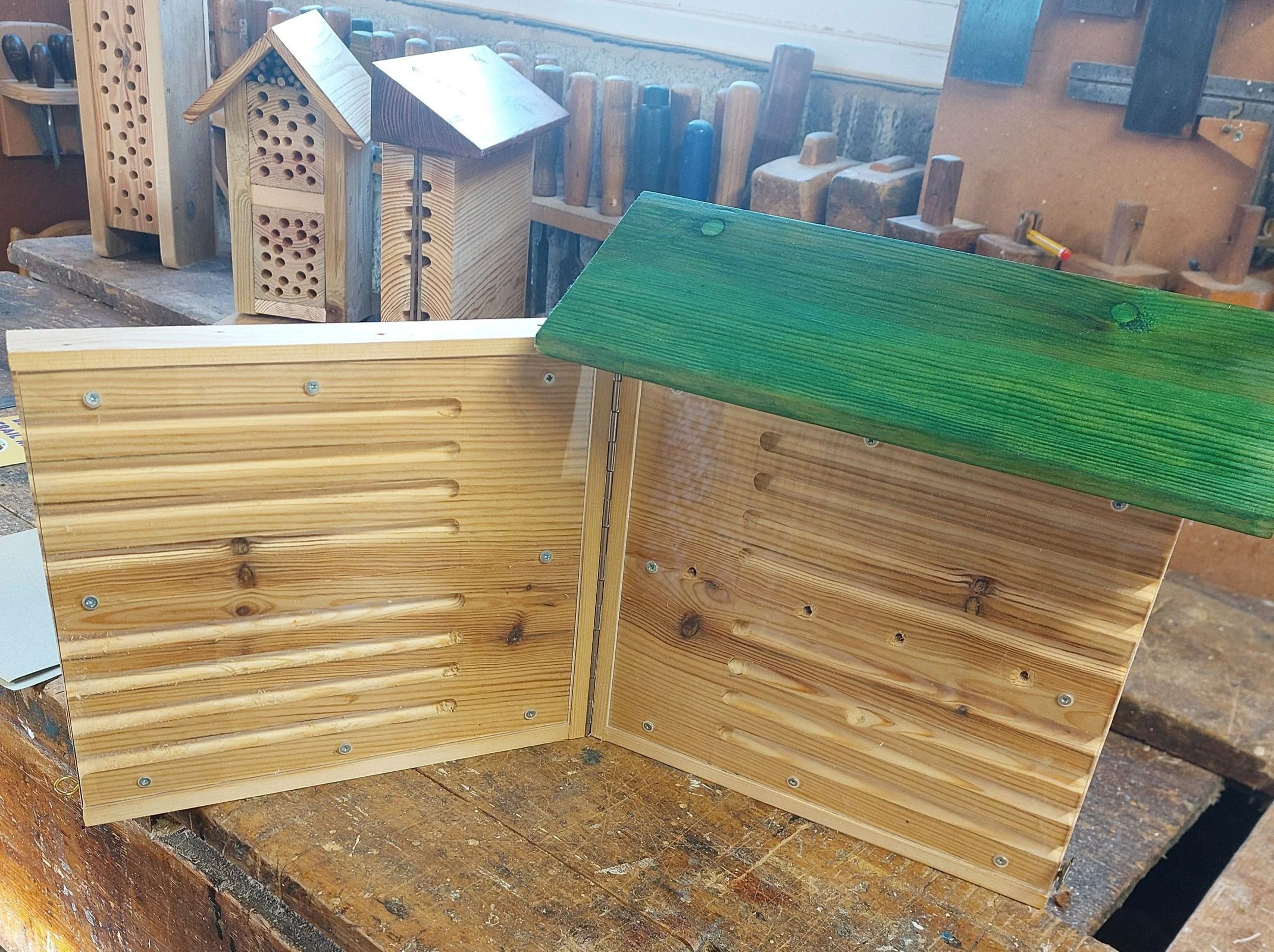
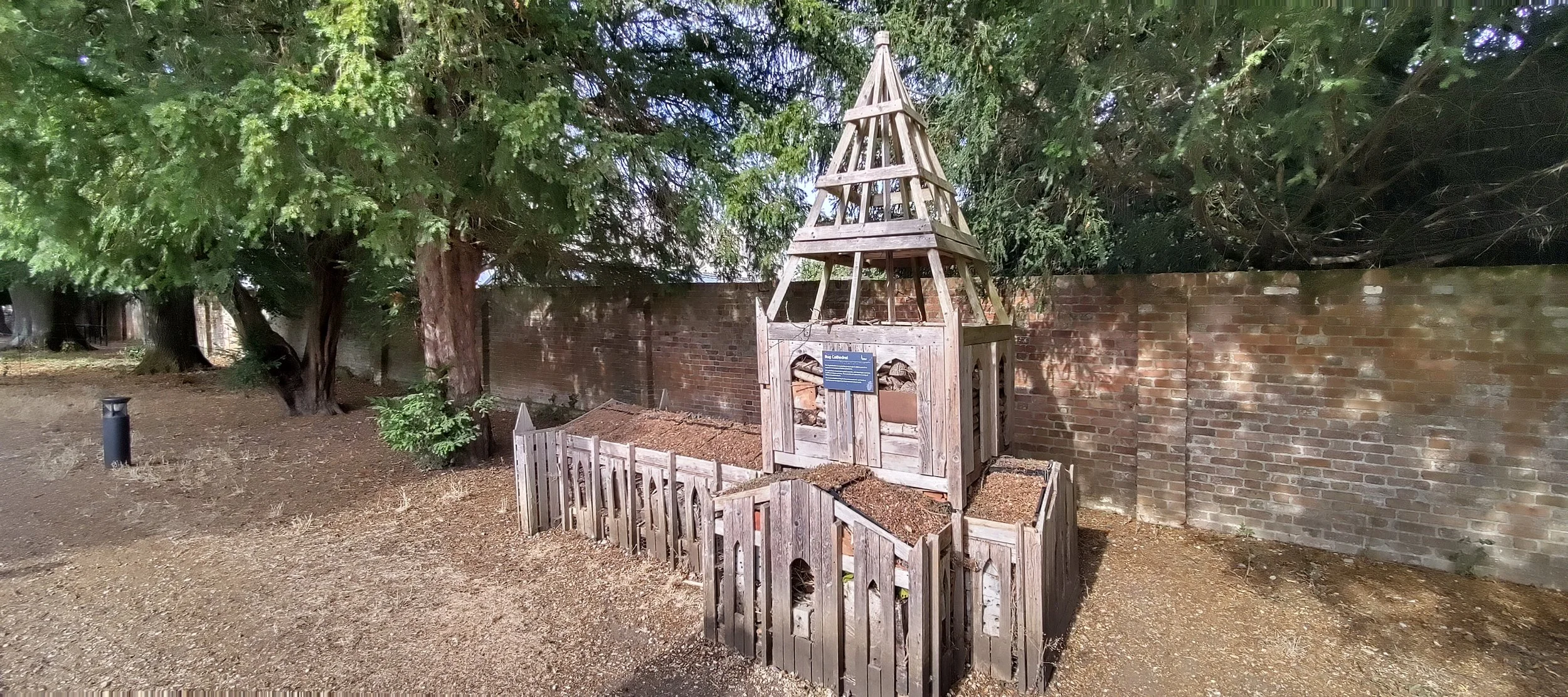
Plenty of places are doing their bit for the pollinators – I recently spotted this rambling effort outside a café in Marlborough and this magnificent ‘bee cathedral’ in Salisbury (see photos below). I should add that the cafe build could be very attractive to spiders and wasps which love to raid the eggs in a solitary bee nest.
If you want to know more about solitary bees and other pollinators, you can check out these websites:
University of Sussex’s Buzz Club: https://www.thebuzzclub.uk/
UK Pollinator Monitoring Scheme: https://ukpoms.org.uk/
Bee Friendly Trust: www.beefriendlytrust.org
That’s all for now – please do consider installing your own bee hotel, it’s well worth the effort.
Phew, I made it to the end of this blog without a single bad bee-related pun (well, except for the title!)
Until next time..
Mark
September 2026