
Several Birds a Ringing
Beep beep! Beep beep! The 5 am alarm wrenches me from sleep. On a normal Sunday morning, I’d be happy to lie in bed. But not today – today I’m a man on a mission. A short while later, having wolfed breakfast, packed a sandwich and a flask of coffee, I’m firing up the motorbike to ease out onto the road heading west.
So, why the early morning start? Well, today I’m off to Seaton Wetlands for my first day as a trainee bird ringer. This is something that started back in the summer when I dropped in to see a team ringing sand martins at the pond by the Discovery Hut at the invite of Sue Murphy, one of our regular River Lim Action Riverfly monitors and himalayan balsam pullers.
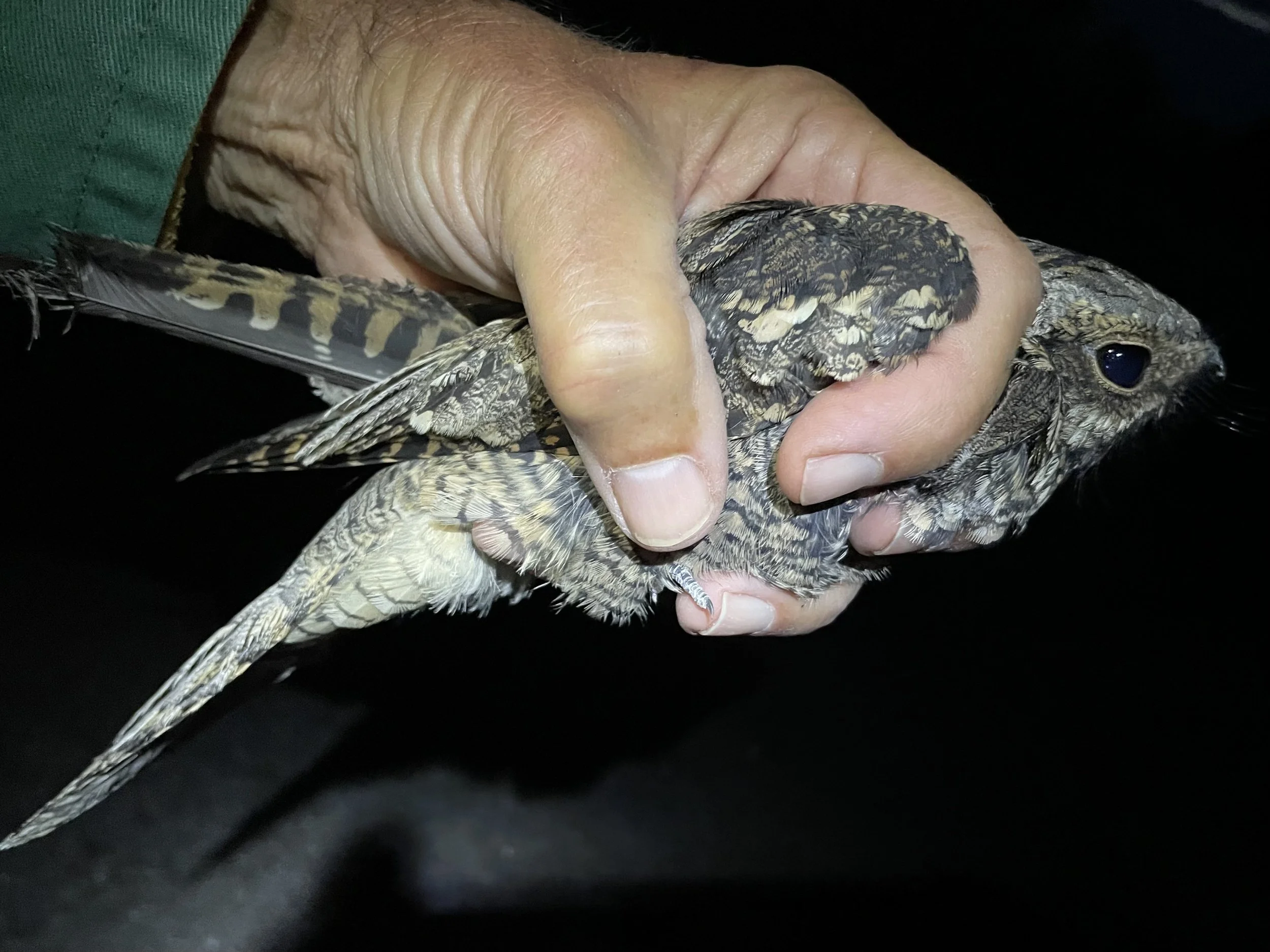
As an avid bird lover, I was intrigued, and a second ringing event soon followed on Trinity Hill where Sue and a couple of others were holding an evening session, this time targeting nightjars (see pic above). Having never before seen a nightjar, it was an incredible experience, not only hearing this mysterious bird making its characteristic ‘churring’ call but also seeing its spectacular swooping flight over the twilight common. In total they ringed and released four nightjars that night, and I was privileged to be allowed to hold one of them and release it onto the grass where it sat for a moment before taking off into the night sky. I was hooked.
So, what is bird ringing all about you might ask? Well, generally it involves setting up “Mist” nets to trap birds in flight, although there are other methods. The birds are then carefully disentangled from the net and gently bagged until they can be quickly processed and finally released.
The next question is usually ‘does it harm them?’ Reassuringly, every effort is focussed on preventing the birds experiencing any suffering or undue stress. Bird ringers like Sue are highly trained and expert at handling birds safely and gently. A correctly fitted ring doesn’t hamper a bird’s ability to fend for itself and thrive. How do we know? Well, ringed birds have been recaptured on other continents having successfully completed their migration while other birds have been recaught back at the original ringing site, sometimes years later.
The follow-up question is often, ‘what do you do it for?’ It’s a fair question; what is the point of ringing? The answer is it’s all about the science! We have gained so much knowledge about birds from ringing: patterns of migration and how they have changed – particularly in response to climate change and changes in population numbers. There’s so much more I could tell you, but a better source of information would be the British Trust for Ornithology.
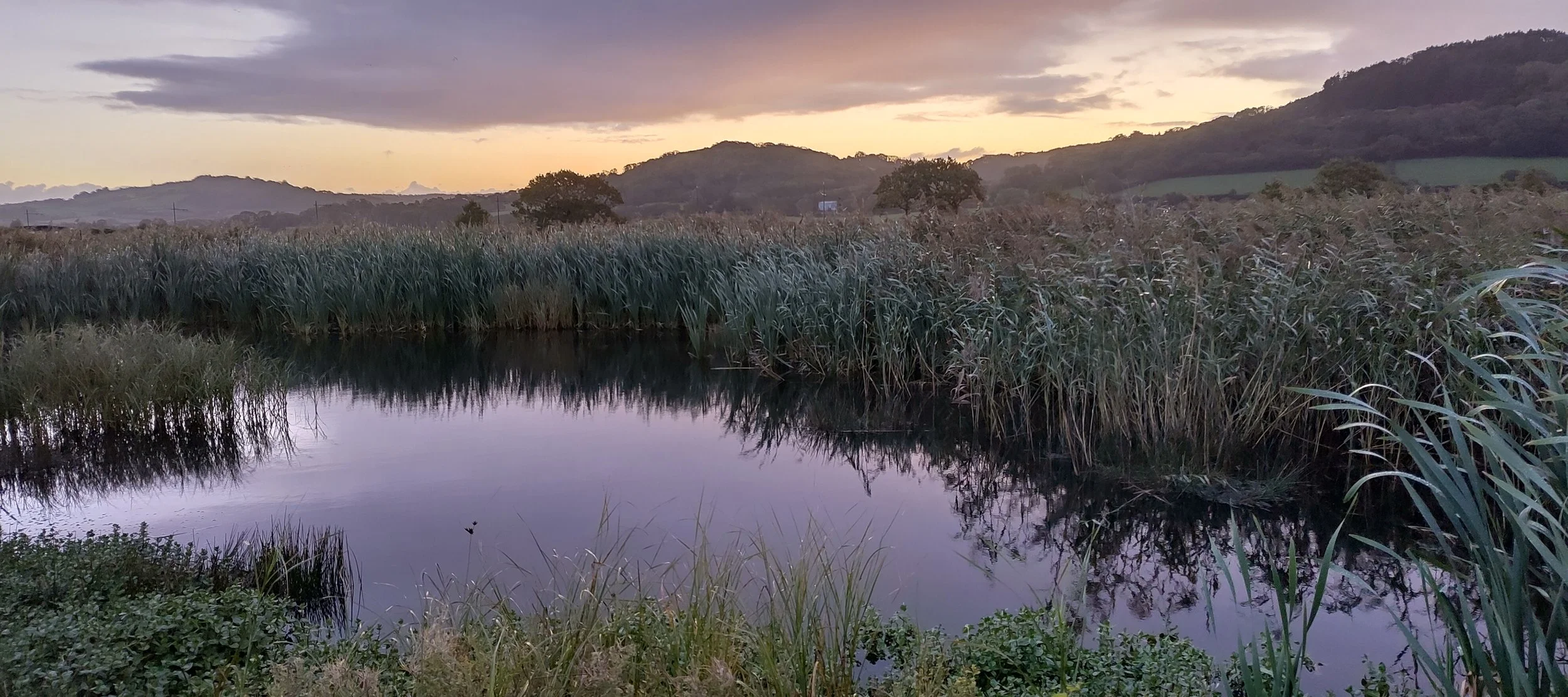
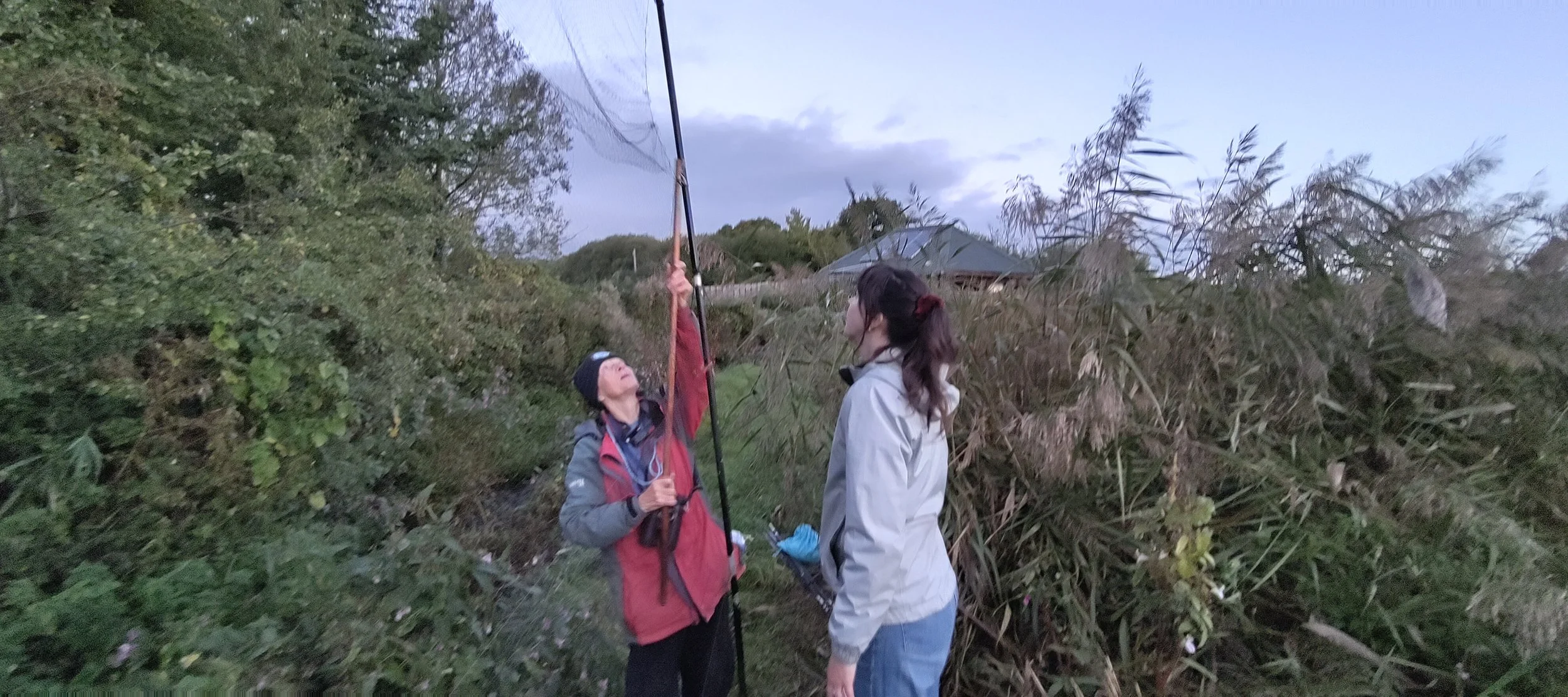
Back to today and I meet up with Sue and the team just in time to help setting up the nets. It’s a tricky procedure and it’s vital it’s done correctly so that the birds don’t get injured or end up lying in wet grass that would leave them vulnerable to dying of cold. With the nets safely up, thoughts turn to a warming cuppa back at base, but not without a quick round of the site first. Just as well too, as there are several feathery parcels hanging motionless in the nets. I’m not allowed to help here as it takes a lot of patience and skill to disentangle the birds – something that comes only with practice. So, while Sue and the team deftly retrieve the birds, I watch and learn.
Back at base, the next phase is to quickly process the birds. There’s a lot to do, including attaching a ring, measuring wing length, sexing the birds where possible, ageing them, and determining fat and muscle for migratory species. We start by gently extracting them from the cloth bags that keep them from harm and fitting an appropriately sized ring with a unique code.
I’m slightly taken aback when Sue suggests I have a go at ringing one of the birds myself. She’s selected a relatively easy reed bunting for my first attempt. Suddenly, I’m quite nervous. The responsibility of handling such a delicate creature is daunting. Eventually, I have the open ring in the pliers and, as I apply it to the bunting’s right leg, I’m struck by how much it resembles a cocktail stick. One wrong move and I could do fatal damage. Hardly daring to breathe, I tighten the ring on the leg and nip it closed. Next, I do the wing measurement – getting it slightly wrong as Sue’s check reveals. We confirm it’s a male, hatched this year, and quickly weigh it. All the data are recorded and it’s time to release him. Under Sue’s watchful gaze, I use the special ‘ringer’s grip’ – two fingers either side of the bird’s neck and thumb wrapping the wing to prevent premature escape – to place the bird on my right palm and gently release him so that he can fly away as soon as he’s ready. And off he goes – my first bird ringing attempt is a success!
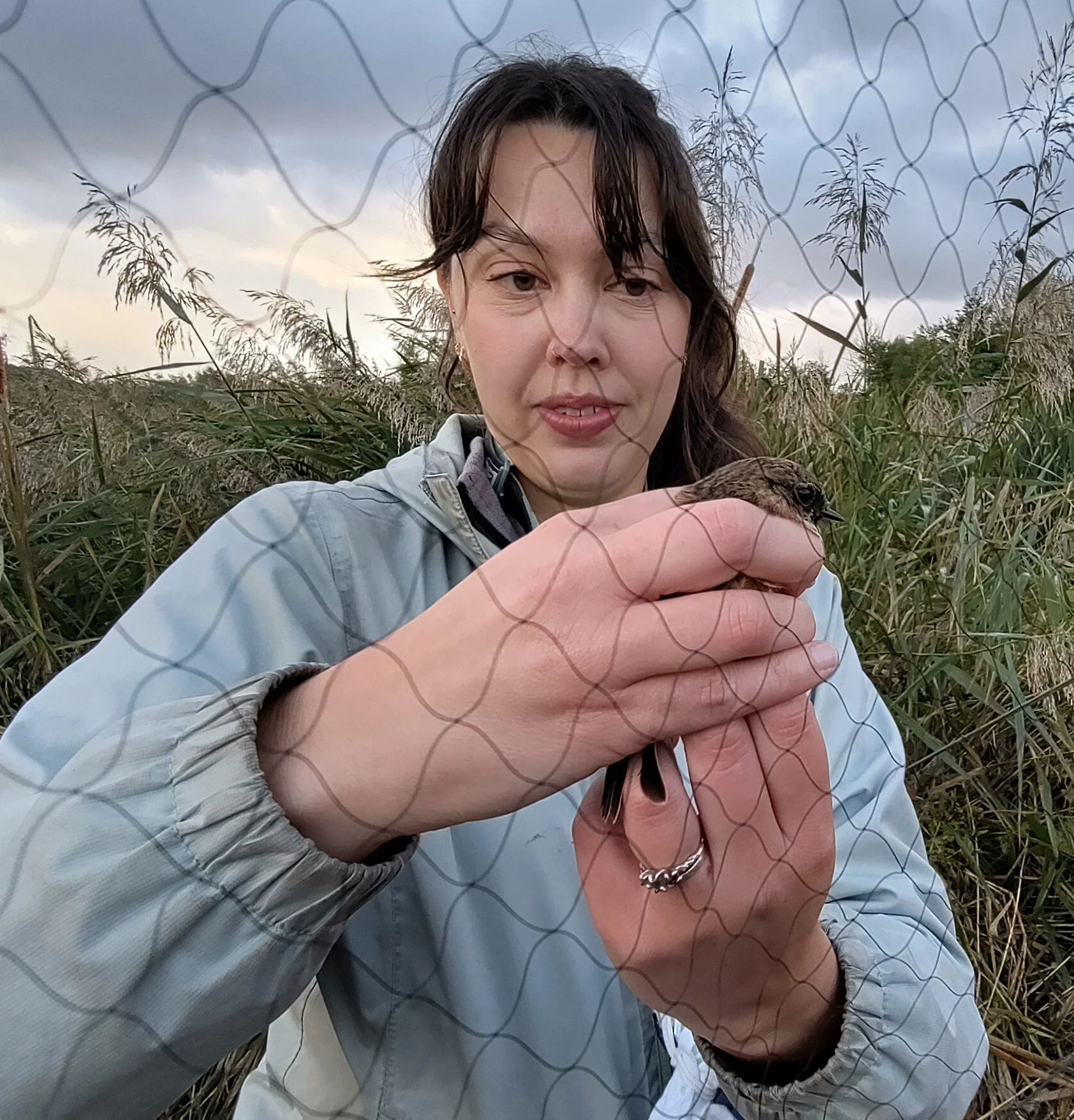
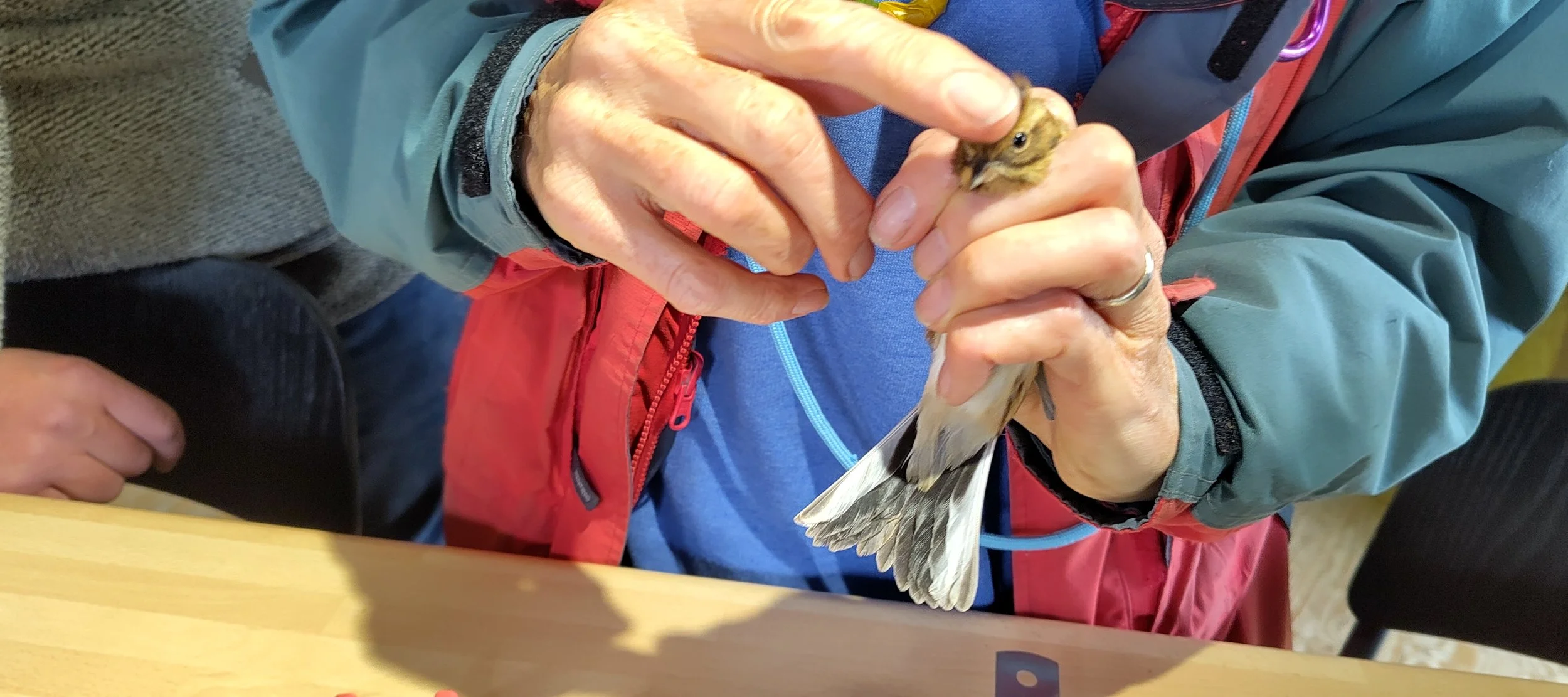
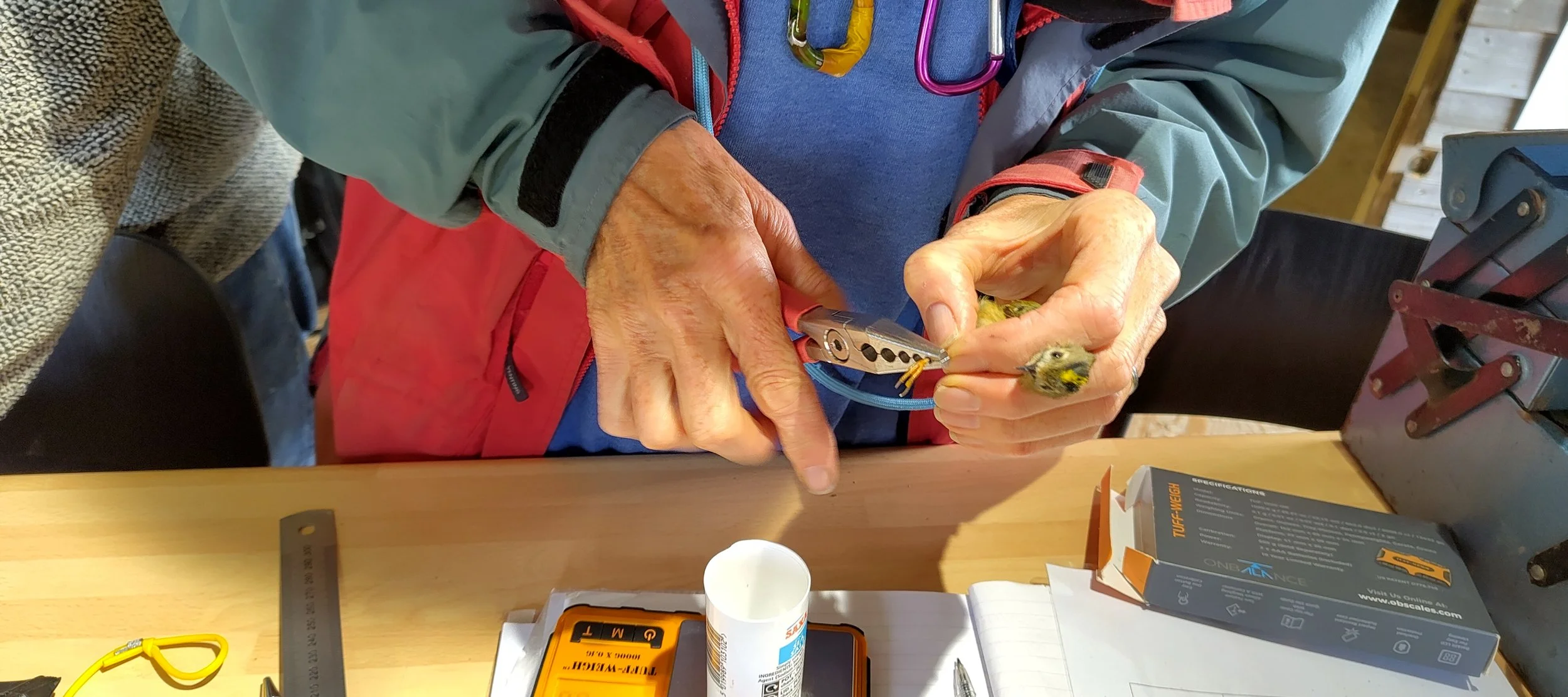
Throughout the morning, we visit the nets several times and ring a good number and range of birds. I get to ring half a dozen birds, feeling slightly more confident each time. As we are processing our haul, visitors to the Wetlands come to watch, adding to the already significant pressure as I go through the routine. Sue is a wonderfully patient and knowledgeable trainer and keeps me steady as we work. In fact, the whole team are equally impressive. Expert, skilled and calm, they also relish the chance to engage with members of the public – especially children, who are our conservationists of the future.
At one point, I’m given the task of ringing a blue tit and even as I take it in the ringer’s grip to allow me to attach the ring, it goes for me. Although I’m trying hard not to hurt the bird, it feels very differently about me! I’m repeatedly pecked – sometimes gripped for several painful seconds before it lets go. Eventually, the ring is on, the wing measured and the bird weighed. I take it outside to release it, but instead of flying off, it launches at my finger for another painful attack before finally taking wing – the little horror!
Some time later, we do our final rounds, detach a few last birds for ringing and carefully take down the nets. I can’t remember how many birds or how many species we have ringed today, but it has all been carefully logged, and Sue has written a fantastic blog, which you can visit if you want to know more. I certainly know I ringed a few reed buntings, a blue tit and a goldcrest; other highlights were sedge and reed warblers and a couple of stonechats. I’ve had a fantastic day. I’m knackered with the stress of handling the birds but also elated to be told that I have the potential to be a certified ringer if I want to train, which I most certainly do!
Until next time.. Mark.
December 2025